


9 Best Crop Monitoring Software Platforms
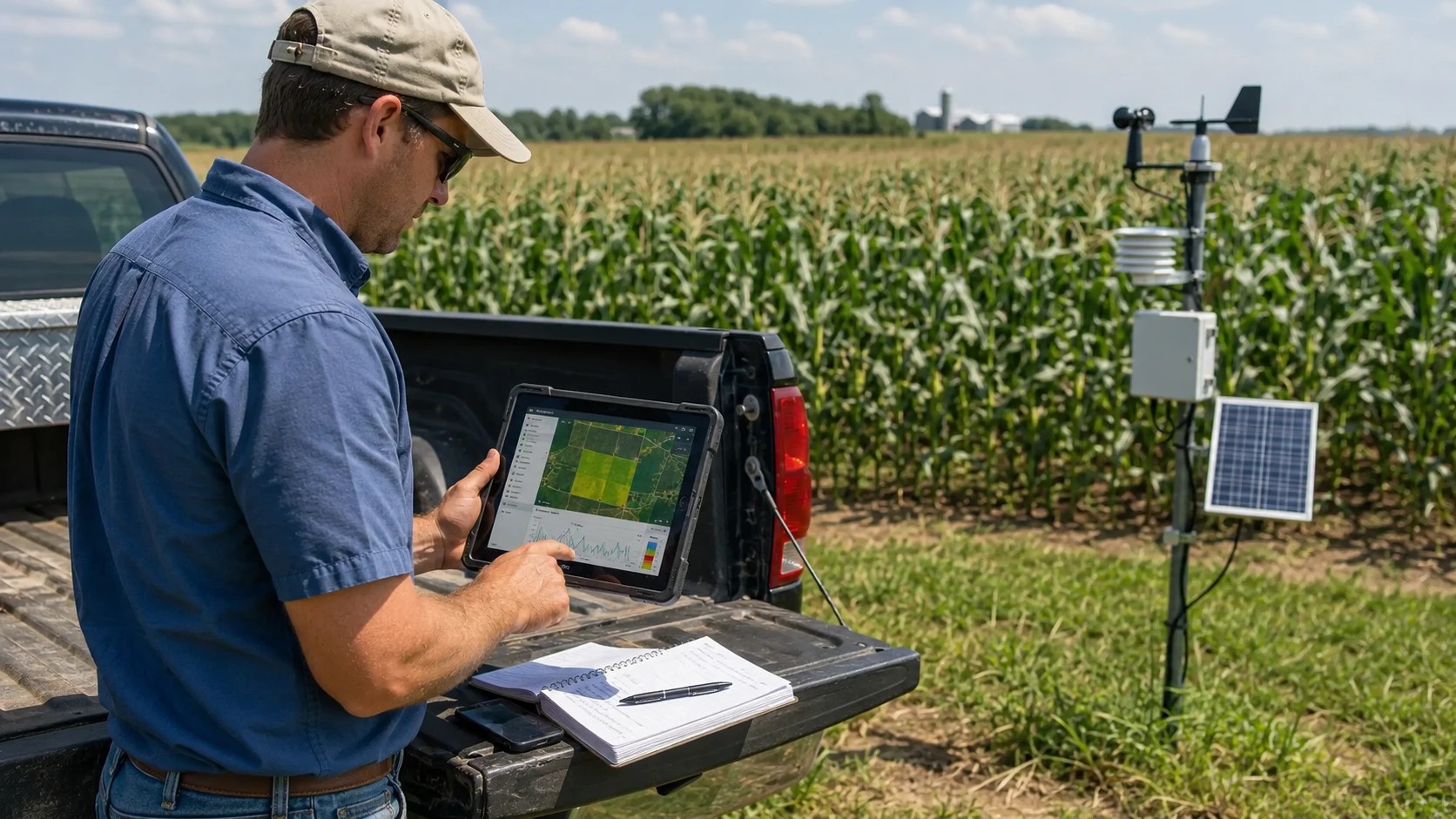
Most crop monitoring software collects a lot of data – field observations, weather, satellite imagery – but that alone does not improve farm performance.
What actually matters is whether the system converts that data into clear, operational decisions: what to do, where to do it, and in what order.
In practice, the difference between a useful platform and a passive dashboard is decision structure. Strong systems reduce ambiguity by prioritizing actions across fields, aligning teams around the same reality, and translating complex agronomic signals into a limited set of concrete next steps that can actually be executed.
The real constraint is not access to data, but whether that data can be structured into usable agronomic workflows – scouting that is crop-specific, irrigation decisions that reflect field conditions, nutrient planning tied to growth stage and yield targets, and reporting that works consistently across multiple farms, teams, and regions.
A platform can appear capable in a controlled demonstration, but its true value is only proven when it holds up under distributed, real-world operations where decisions must be made repeatedly, by different users, under different constraints, without losing consistency or traceability.
This comparison focuses on how these systems perform in real agricultural settings. The right choice depends on your crop mix, geography, internal workflow, and the level of agronomic interpretation your team actually needs.
What the best crop monitoring software platforms should do
At a minimum, crop monitoring software should help users identify variability, track field conditions over time, and prioritize action. For professional users, that is only the starting point. A stronger platform supports scouting workflows, weather interpretation, satellite or drone imagery review, and connections to operational decisions such as fertilization, irrigation scheduling, pest and disease follow-up, or harvest planning.
The best systems also reduce noise. Too many platforms present vegetation maps without enough agronomic context. An NDVI layer can highlight variation, but it cannot by itself explain whether the issue is nitrogen deficiency, root damage, salinity, irrigation non-uniformity, compaction, or a disease outbreak. Good systems help users move from signal to diagnosis, not just signal to screenshot.
For agribusiness enterprises and public-sector organizations, another requirement is consistency. The platform has to support standardized field records, reporting across regions, and clear handoff between advisors, growers, managers, and procurement or sustainability teams.
9 best crop monitoring software platforms to consider
1. Climate FieldView
FieldView is widely used because it combines monitoring with strong operational integration. It is particularly useful for row crop operations that want to connect field activity records, planting data, imagery, and yield analysis in one environment. For teams already working in highly mechanized systems, that integration can save time and improve post-season analysis.
Its strength is not necessarily deep crop-specific agronomy for every production system. It is strongest where machinery data and broad-acre decision workflows are central. Specialty crop operations may find parts of the system less aligned with their scouting and irrigation demands.
2. yieldsApp
yieldsApp is an advanced crop monitoring platform that combines spatial field monitoring, temporal crop intelligence, and historical agronomic analysis into a unified system. It integrates satellite-based monitoring, anomaly detection, and multi-season field interpretation to provide a continuous view of crop development across time.
Beyond monitoring, yieldsApp translates field data into dynamic agronomic protocols for fertilization, irrigation, and crop protection that can adapt during the season as crop stage, weather, field observations, analyses, and conditions change.
The platform also includes operational farm-management features such as scouting, field records, activity tracking, recommendations, and traceability, and can integrate data from sensors, weather sources, laboratory analyses, machinery, and other farm technologies.
It also supports benchmarking across fields and farms, helping growers, farm managers, and agronomists compare performance, detect anomalies, and prioritize interventions. This makes it suitable for mid-sized and large farms, as well as agribusinesses, consultants, and grower networks managing multiple operations.
3. EOSDA Crop Monitoring
EOSDA Crop Monitoring is often chosen for its accessibility, satellite-based monitoring, weather data, and field condition alerts. It works well for users who need broad coverage across many fields and countries without building a complex tech stack. Agribusinesses and consultants monitoring dispersed operations may find this especially practical.
The trade-off is that satellite-first systems depend on image availability, cloud conditions, and the user’s ability to interpret variability correctly. They are efficient for prioritization, but field validation still matters.
4. Agremo
Agremo is more specialized around aerial imagery analytics, especially from drones. It can be useful where high-resolution crop assessment is needed for stand counts, emergence checks, stress identification, or damage evaluation. Seed production, trial work, and high-value crop systems can benefit from that resolution.
Its limitation is practical scale and workflow dependence. Drone-based monitoring can be powerful, but it requires flight planning, data handling, and the right timing. It complements satellite and field scouting well, but rarely replaces them.
5. Granular
Granular is often evaluated less as a pure crop monitoring platform and more as a farm management system with monitoring components. It is attractive to larger operations that want financial, operational, and agronomic oversight in the same system. For managers balancing labor, machine use, cost control, and field execution, that broader management view can be a major advantage.
The question is whether your team needs deep monitoring detail or stronger operational control. Granular tends to fit best when management discipline across a large organization is the main goal.
6. OneSoil
OneSoil offers satellite-based field analytics and variable-rate support with a relatively user-friendly experience. It is often considered by growers and advisors looking for vegetation monitoring, zoning, and basic field analysis without the heavier enterprise structure of some alternatives.
Its value can be solid for quick visibility and prescription support. Still, users managing complex pest, disease, irrigation, and nutrition decisions may need additional agronomic tools around it.
7. Xarvio Field Manager
Xarvio is especially relevant where users want digital support tied to agronomic recommendations, including disease risk and crop protection decision support in some regions and crops. It moves beyond simple monitoring by trying to interpret field risk and suggest actions.
That can be useful, but recommendation engines should always be evaluated carefully against local conditions, resistance management realities, and crop-specific production goals. Decision support is helpful only when the underlying agronomy fits the field.
8. John Deere Operations Center
Operations Center is strong where equipment connectivity and whole-farm data flow are priorities. For enterprises built around John Deere machinery, the platform can improve visibility from machine activity to field records and support data organization at scale.
As with other machinery-centered systems, the fit depends on your production model. It is highly practical for operations that need equipment-linked traceability, but less complete if your biggest need is independent agronomic diagnosis across diverse crops and field conditions.
9. Farmers Edge
Farmers Edge combines imagery, weather, and agronomic data services with a focus on decision support and benchmarking. It has appealed to users who want a more bundled approach rather than assembling separate tools for sensing, analytics, and advisory support.
The main consideration is how much of that bundled model aligns with your internal expertise. Some organizations prefer an all-in-one environment, while others want more control over how data layers are interpreted and used.
From monitoring data to agronomic interpretation
While crop monitoring platforms focus on current field conditions, advanced agronomic decision-making requires interpretation across time and space. This includes understanding crop development stages, estimating planting dates, predicting harvest timing, reconstructing field history, and comparing performance across fields and seasons.
In this context, yieldsApp represents an advanced crop monitoring platform that extends beyond static field observation by integrating spatial, temporal, and historical agronomic signals into a unified analytical system.
Common buying mistakes
One common mistake is selecting software based on interface quality alone. Usability does not guarantee agronomic value. Another mistake is overvaluing data availability without considering whether teams can interpret and act on it effectively.
A third mistake is ignoring crop specificity. Platforms often perform differently across crop types, especially between row crops, orchards, and high-value horticulture systems.
Even strong platforms underperform when teams are not aligned on interpretation methods, thresholds, and how to connect monitoring outputs to field operations.
Which type of platform fits which operation
Large row crop operations often benefit from machinery-integrated systems. High-value irrigated systems often require more detailed environmental monitoring. Consultants and agribusinesses typically prefer scalable satellite-based systems for multi-client visibility.
In many cases, combining software with agronomic expertise produces better outcomes than relying on a single system.
Cropaia’s perspective is straightforward: software should strengthen agronomic judgment, not replace it.
Before committing, test each platform against a real production problem. That is usually where the right decision becomes clear.








About Post Author
