

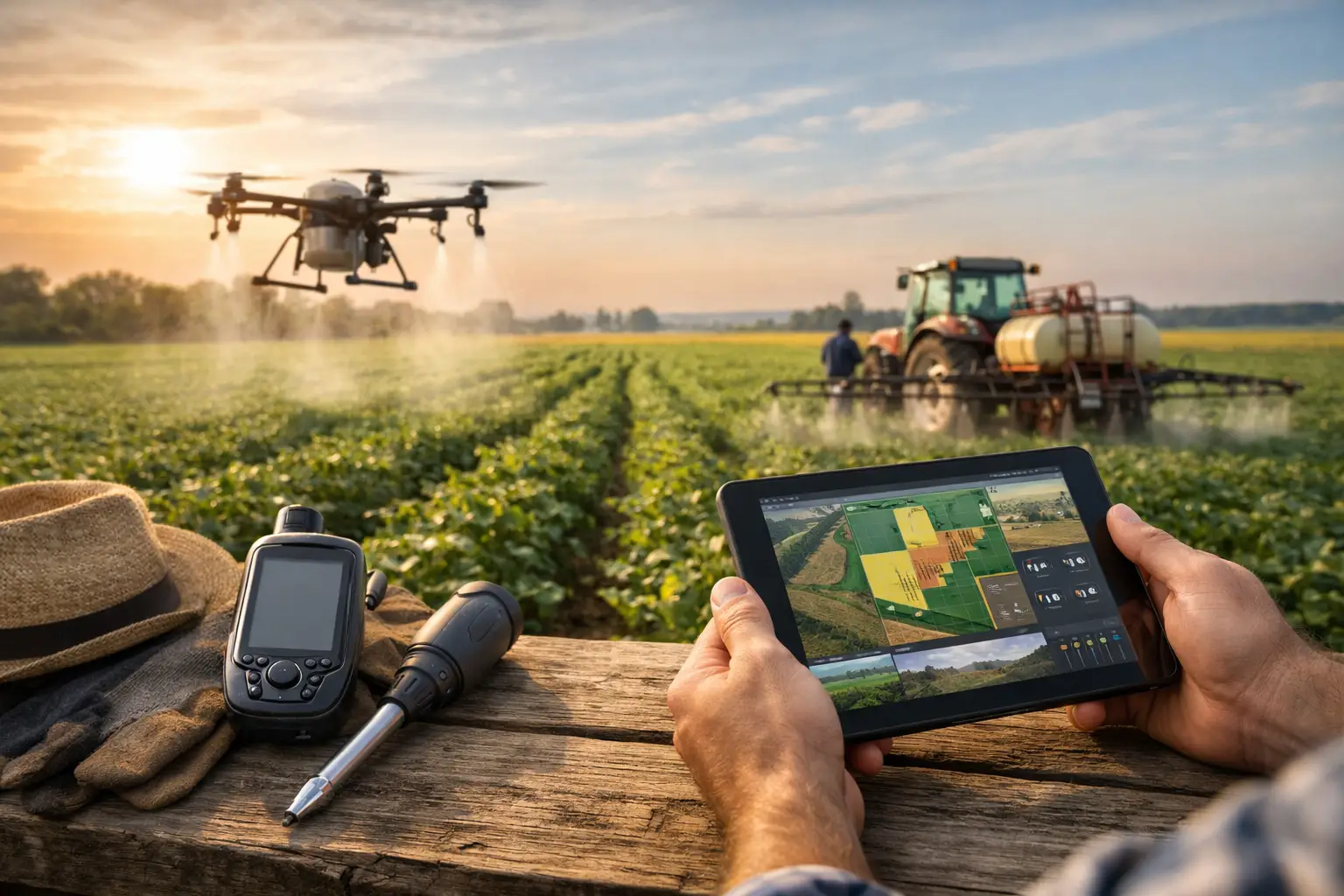
Best Farm Compliance Tools for Field Execution
A compliance failure rarely starts when an auditor asks for a record. It usually starts weeks earlier, when an irrigation adjustment is discussed verbally, a spray interval is missed, a fertilizer application is recorded late, or a field observation never reaches the person responsible for corrective action. The best farm compliance tools address that operational gap: they turn agronomic and sourcing requirements into assigned, verified work at field level.
For commercial farms and organizations managing grower networks, compliance is not simply a document-management task. It sits at the intersection of crop protocols, worker execution, input traceability, irrigation and nutrient decisions, food-safety requirements, sustainability commitments, and buyer specifications. A useful system must therefore support the way agronomy actually happens, including exceptions, changing crop conditions, and incomplete field data.
What the best farm compliance tools must do
The right tool is determined less by the number of forms it contains than by whether it can prove that critical work was planned, completed, checked, and corrected. A generic checklist application may help a single farm collect inspection records. It becomes insufficient when a cooperative, food company, input supplier, or development program needs consistent execution across hundreds or thousands of fields.
A capable compliance platform should connect five operational layers. First, it must translate a requirement into a practical protocol. A requirement such as nutrient-use efficiency, residue compliance, or responsible irrigation needs defined actions, timing windows, responsible roles, and supporting evidence.
Second, the platform needs field-level context. A nitrogen recommendation cannot be assessed independently of crop stage, planting date, soil texture, irrigation method, water quality, previous applications, and expected yield. The same is true for pesticide intervals, harvest requirements, and soil-conservation practices. Compliance tools that store requirements without crop and field context tend to produce records that are complete on paper but weak agronomically.
Third, the system must coordinate people. It should assign activities to field staff, growers, contractors, and supervising agronomists; establish due dates; and make overdue or unverified actions visible. This is especially relevant where one agronomist oversees a large grower base and cannot personally revisit every field.
Fourth, it needs evidence that can be reviewed. Depending on the requirement, that may include geotagged field visits, photographs, input records, irrigation logs, lab results, signed declarations, or harvest documentation. Evidence should be attached to the relevant field, crop cycle, and activity, rather than buried in disconnected folders or messaging threads.
Finally, it must manage exceptions. Good compliance is not the absence of problems. It is the ability to identify a deviation, determine its agronomic or commercial risk, assign a corrective action, and document closure. A missed irrigation event, high bicarbonate irrigation water, or tissue analysis showing excessive nitrogen should trigger an informed response, not merely a red indicator on a dashboard.
Compliance starts with agronomic protocols
Many compliance programs fail because their protocols are written for headquarters rather than for the field. A statement such as “apply fertilizer according to crop demand” is not operationally auditable. A field-ready protocol specifies the crop and variety where relevant, growth stage, decision criteria, permitted inputs, application limits, required records, and escalation process.
Consider fertigation in high-value vegetables, citrus, or berries. The compliance requirement may involve nutrient budgeting, restricted nitrogen sources, water-use records, and runoff-risk controls. But the field team needs to know the actual weekly target, the allowable adjustment range, the water analysis assumptions, and when a deviation requires agronomist approval. Without that detail, teams either improvise or record compliance after the fact.
This is where expert agronomy has a direct commercial value. Cropaia supports commercial growers and technical teams with fertilizer program review, irrigation and fertigation design, salinity and water-quality interpretation, tissue and soil analysis review, and independent second opinions on yield problems. These services help turn broad requirements into technically defensible field protocols. For organizations, customized training can also ensure that agronomists, extension officers, and technical sales teams apply the same decision logic rather than offering inconsistent advice across regions.
Choose tools by operating model, not by feature lists
A large commercial farm, a cooperative sourcing from independent growers, and a food company managing a supplier program have different compliance needs. Treating them as the same procurement case creates expensive gaps later.
A single enterprise farm may prioritize work orders, pesticide and fertilizer records, irrigation verification, internal inspections, and rapid access to block-level history. Its main question is whether managers can see deviations early enough to prevent a crop, residue, or audit problem.
A cooperative or input company usually needs stronger grower segmentation and field-team coordination. It must know which growers received a protocol, who was visited, what recommendations were issued, whether adoption was verified, and where unresolved risks are concentrated. The issue is not only record collection. It is managing consistent technical service at scale.
A food company, financial institution, NGO, or government program may require portfolio-level traceability and reporting across varied production systems. Here, standardization matters, but over-standardization can be harmful. A cotton program in an arid area, for example, cannot use the same irrigation compliance criteria as a rainfed maize program. The system needs a common reporting structure while allowing crop-, region-, and risk-specific protocols.
When evaluating options, test them against actual field scenarios. Ask whether an agronomist can change a recommendation after a field observation, whether the reason for that change is retained, and whether managers can distinguish a late record from a genuinely late application. Ask how the tool handles a field with missing phenology data, conflicting input records, or an irrigation-water analysis that invalidates the standard fertilizer plan. These details reveal whether the platform supports execution or only reporting.
Data quality is the limiting factor
No compliance tool can compensate for weak field data, unclear ownership, or technically poor recommendations. Digital systems make gaps more visible, which is useful but sometimes uncomfortable.
The minimum viable data model should include grower and field identity, boundaries or reliable field references, crop and season, production practices, responsible personnel, and an activity history. For irrigation and nutrition programs, the organization may also need water-source information, irrigation method, soil characteristics, lab analyses, application records, and crop-stage observations. The correct level of detail depends on the risk and value of the crop. Requiring every possible data point from every grower often lowers adoption and encourages unreliable entries.
Data governance also matters. Define who creates a field, who can modify recommendations, who validates evidence, and who closes corrective actions. If those roles are ambiguous, a platform becomes a repository of competing versions of the truth.
Where yieldsApp fits in a compliance program
yieldsApp is designed for organizations that need to standardize and monitor agronomic execution across distributed farms, growers, crops, and field teams. Rather than treating compliance as a final audit package, it can structure protocols, field activities, recommendations, follow-up visits, evidence, and exceptions within the daily operating workflow.
That approach is particularly relevant for grower-network management, sustainable sourcing programs, extension operations, and technical-service teams. Managers gain visibility into protocol adoption and unresolved actions, while agronomists retain the field-level context needed to make sound recommendations. The platform can also support dynamic workflows informed by weather, crop stage, satellite observations, crop models, or agronomic alerts, provided the underlying data and protocol logic are reliable.
The limitation is clear: digital coordination does not replace agronomic judgment. A compliance workflow built on an incorrect fertilizer target or a poorly interpreted water analysis will simply scale the error faster. Organizations benefit most when platform configuration, technical protocols, staff training, and management review are treated as one implementation program.
Build for corrective action, not audit day
The strongest compliance operation is one in which a field manager can see, on an ordinary workday, which blocks need attention, which growers have not completed required actions, and which deviations threaten crop performance or market access. Audit readiness then becomes a byproduct of disciplined execution rather than a separate seasonal project.
Start with the two or three requirements that carry the greatest production, commercial, or regulatory risk. Define the agronomic decision rules behind them, test the workflow with real field teams, and measure whether overdue actions and unresolved deviations decline. Once the team trusts the process, expand it to additional crops, regions, and requirements.
Better compliance is built one verified field decision at a time. The practical goal is not more records. It is a farm or grower network where the right agronomic action is clear, accountable, and visible before a preventable problem reaches the buyer, auditor, or harvest.











About Post Author
