

How to Manage Fertigation Programs Well
A fertigation program is not just a nutrient recipe. Its performance depends on how well the formula is synchronized with irrigation timing, water quality, root activity, crop demand, and field-level execution. That is why knowing how to manage fertigation programs means going beyond fertilizer calculations and focusing on how nutrients actually move through the irrigation system, into the root zone, and through the crop across the season.
For commercial growers, farm managers, and agronomists, fertigation is not just a convenient way to apply nutrients. It is a high-precision delivery system with little room for sloppy execution. Done well, it improves nutrient use efficiency, supports yield and quality targets, and gives the farm more control over crop response. Done poorly, it can create uneven nutrition, root-zone losses, emitter problems, and expensive misreadings of what the crop actually needs.
Start with the crop uptake curve, not the fertilizer tank
The strongest fertigation programs are built backward from crop demand. Before selecting materials, injection frequency, or target concentrations, define how nutrient uptake changes by growth stage. A young vegetable crop with limited root volume needs a very different approach than a mature orchard entering peak fruit fill. In both cases, the question is not how much fertilizer the farm plans to apply this month. The question is how much nutrient the crop can realistically absorb under current root activity, temperature, moisture, and growth conditions.
This is where many programs become inefficient. Nitrogen and potassium often get pushed aggressively because they are easy to inject and visually tied to canopy growth, but that does not mean the timing is right. Early overapplication can increase vegetative growth at the expense of crop balance, while late corrections are often too slow to recover yield or quality. Phosphorus, calcium, magnesium, sulfur, and micronutrients also need stage-specific logic. Some nutrients fit continuous low-dose feeding. Others are better managed as targeted applications based on root-zone chemistry, irrigation constraints, or plant analysis.
A sound fertigation plan aligns seasonal demand with weekly decisions. That means setting a seasonal nutrient budget, then adjusting the delivery pattern by phenology, expected uptake, and field conditions rather than dividing total fertilizer evenly across irrigation events.
How to manage fertigation programs in the field
Field management is where strategy becomes either agronomy or guesswork. A practical fertigation program has four working parts: a reliable irrigation system, compatible fertilizer sources, a clear injection strategy, and a monitoring process that catches problems early.
The irrigation system comes first because fertigation quality cannot exceed irrigation uniformity. If pressure variation, clogging, poor filtration, or long set-to-set differences already exist, injected nutrients will follow those same uneven patterns. In drip systems, this may lead to major differences in nutrient delivery between zones or between the head and tail ends of laterals. In sprinkler systems, distribution and leaching risks often complicate timing even further. Before refining the fertilizer program, confirm distribution uniformity, injection accuracy, line flushing, and maintenance standards.
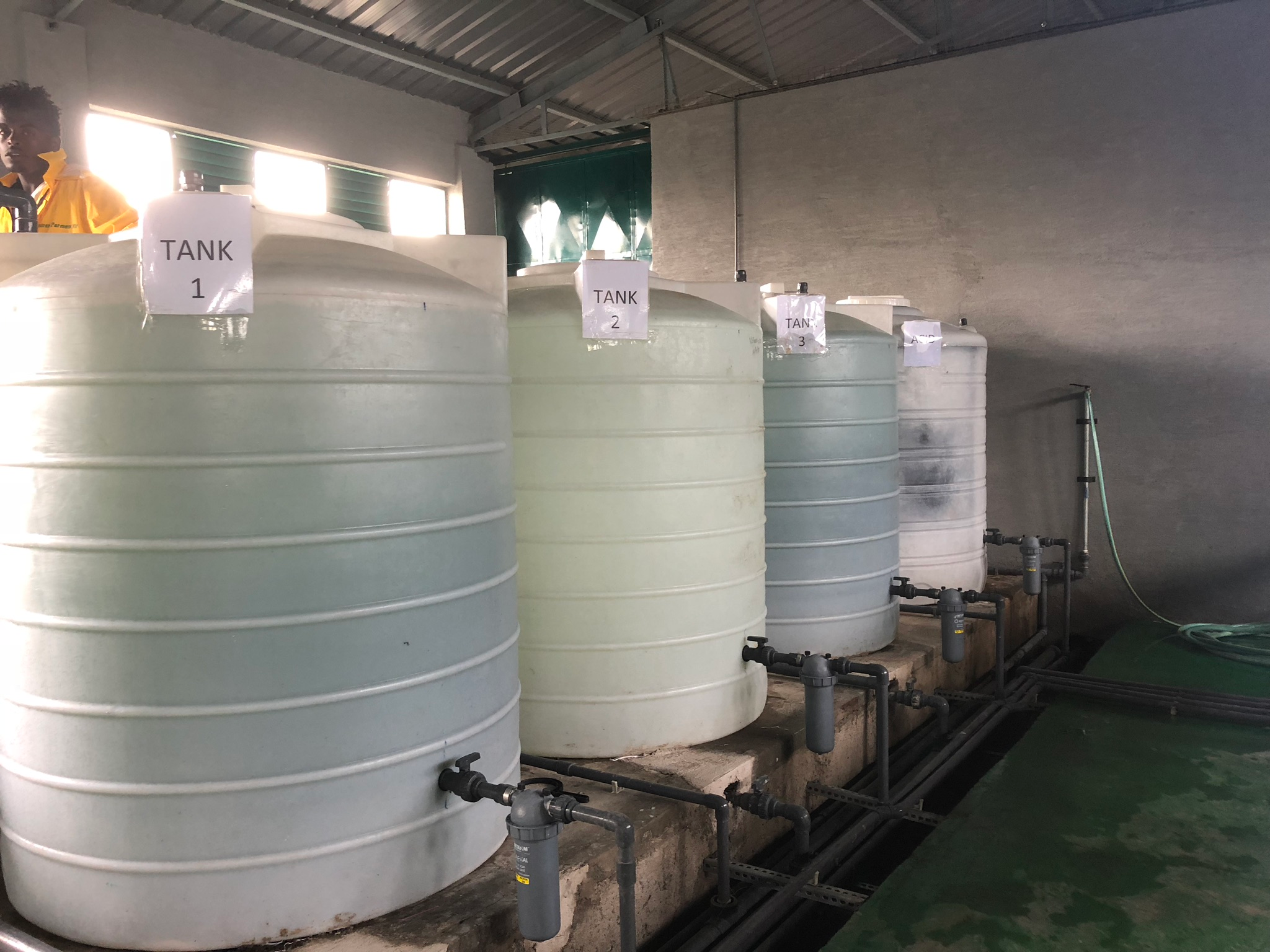
Fertilizer compatibility is the next operational issue. Not every soluble source belongs in the same stock tank, and not every source behaves well under the farm’s water chemistry. Calcium with sulfate or phosphate sources can create precipitation problems. High bicarbonate water may require acidification strategy. Micronutrients can also become unstable depending on pH and tank mixing order. The right material is not simply the cheapest per unit of nutrient. It is the source that stays soluble, moves predictably, and fits the crop and irrigation system without creating downstream maintenance problems.
Injection strategy should match both soil type and irrigation behavior. On coarse-textured soils, frequent low-dose fertigation often gives better control and reduces leaching risk. On finer-textured soils, the program may tolerate larger doses, but only if irrigation duration and water movement are well understood. Large fertigation events can push nutrients below the active root zone when irrigation sets are too long or when application timing is poorly matched to infiltration patterns.
In most commercial systems, nutrient injection should occur after the system reaches stable operating pressure and before the final flushing period. Injecting too early can create uneven delivery during pressurization. Injecting too late leaves fertilizer in the lines and reduces field uniformity. That sounds basic, but it is still one of the most common execution errors on farms with otherwise sophisticated nutrition plans.
Match fertigation frequency to soil, crop, and risk
There is no universal best frequency. Daily fertigation can be highly effective in intensive drip-irrigated crops, especially where root zones are shallow and nutrient demand changes quickly. Weekly fertigation may be adequate in some perennial systems or lower-frequency irrigation schedules. The right answer depends on how tightly the farm needs to control nutrient availability and how easily the root zone can be overfilled or depleted.
Frequent fertigation improves precision, but it also raises the need for tighter management. Small mistakes repeated daily can become large seasonal errors. Less frequent applications reduce operational complexity, but they may reduce responsiveness and increase nutrient concentration swings in the root zone. This trade-off matters most in sandy soils, salinity-prone environments, and high-value crops where quality is sensitive to nutrient balance.
A useful rule is to increase frequency as root-zone buffering capacity decreases and as crop sensitivity increases. That does not eliminate the need for larger strategic adjustments during key growth periods, but it does improve consistency.
Use monitoring to verify delivery, not just intention
A fertigation program should be measured by what reaches and supports the crop, not by what was injected according to the log sheet. That requires a monitoring framework that connects irrigation performance, root-zone conditions, and plant response.
Water quality testing is foundational. Electrical conductivity, bicarbonates, sodium, chloride, sulfate, calcium, magnesium, pH, and trace elements all affect fertilizer behavior and crop response. Poor water quality can distort the entire program, especially where salinity management and nutrient uptake are already under pressure.
Root-zone monitoring is just as important. Soil moisture data helps determine whether irrigation volumes are keeping nutrients in the active uptake zone or pushing them below it. In some systems, soil solution sampling can help track nitrate, EC, and salt accumulation trends. That information is especially valuable when crops show deficiency or stress symptoms that may actually be caused by poor placement rather than low fertilizer supply.
Plant-based measurements complete the picture. Tissue analysis gives a structured view of nutrient status, but it is slower and sometimes less sensitive to short-term shifts. Sap analysis can add speed in intensive systems, though interpretation depends heavily on sampling discipline and crop-specific experience. Neither tool should be used in isolation. The most reliable decisions usually come from combining plant analysis with irrigation records, water chemistry, and field observations.
Common mistakes when managing fertigation programs
Many weak programs fail in predictable ways. One is treating fertigation as a fertilizer schedule rather than an irrigation-integrated agronomy system. Another is copying a standard recipe across fields with different soil texture, water quality, or irrigation uniformity. A third is adjusting concentrations without checking whether irrigation runtime or wetting pattern changed first.
There is also a common tendency to chase visual symptoms with more injected fertilizer. If the issue is root restriction, low oxygen, salinity, poor pH control, or emitter non-uniformity, more fertilizer may worsen the problem. High-performing programs separate nutrient deficiency from nutrient access problems.
Another avoidable mistake is ignoring the system itself. Injection pumps drift. Filters lose performance. Stock solutions settle. Pressure regulators age. These are not maintenance side notes. They are agronomic variables because they directly affect nutrient placement.
Build a decision process, not a fixed formula
The best approach to how to manage fertigation programs is to treat them as dynamic systems. Start with a crop-specific uptake model and realistic yield target. Adjust nutrient timing to phenology and expected demand. Confirm that the irrigation system can deliver uniformly. Choose compatible materials based on water chemistry and operational constraints. Then monitor the root zone and the plant so the program can be corrected before yield potential is lost.
For large operations, this is where digital tools and disciplined recordkeeping become useful. Fertigation records tied to irrigation sets, EC trends, tissue results, and field performance make it easier to distinguish real agronomic signals from noise. Technology helps, but only when it supports field-level decisions rather than replacing them. That principle is central to Cropaia’s broader agronomy philosophy: better decisions come from combining technical knowledge with disciplined execution.
A strong fertigation program does not look impressive because it is complex. It performs because every input, timing decision, and correction is tied to how the crop actually grows in that field. That is where efficiency stops being a spreadsheet claim and starts showing up in yield, quality, and consistency.












About Post Author
