


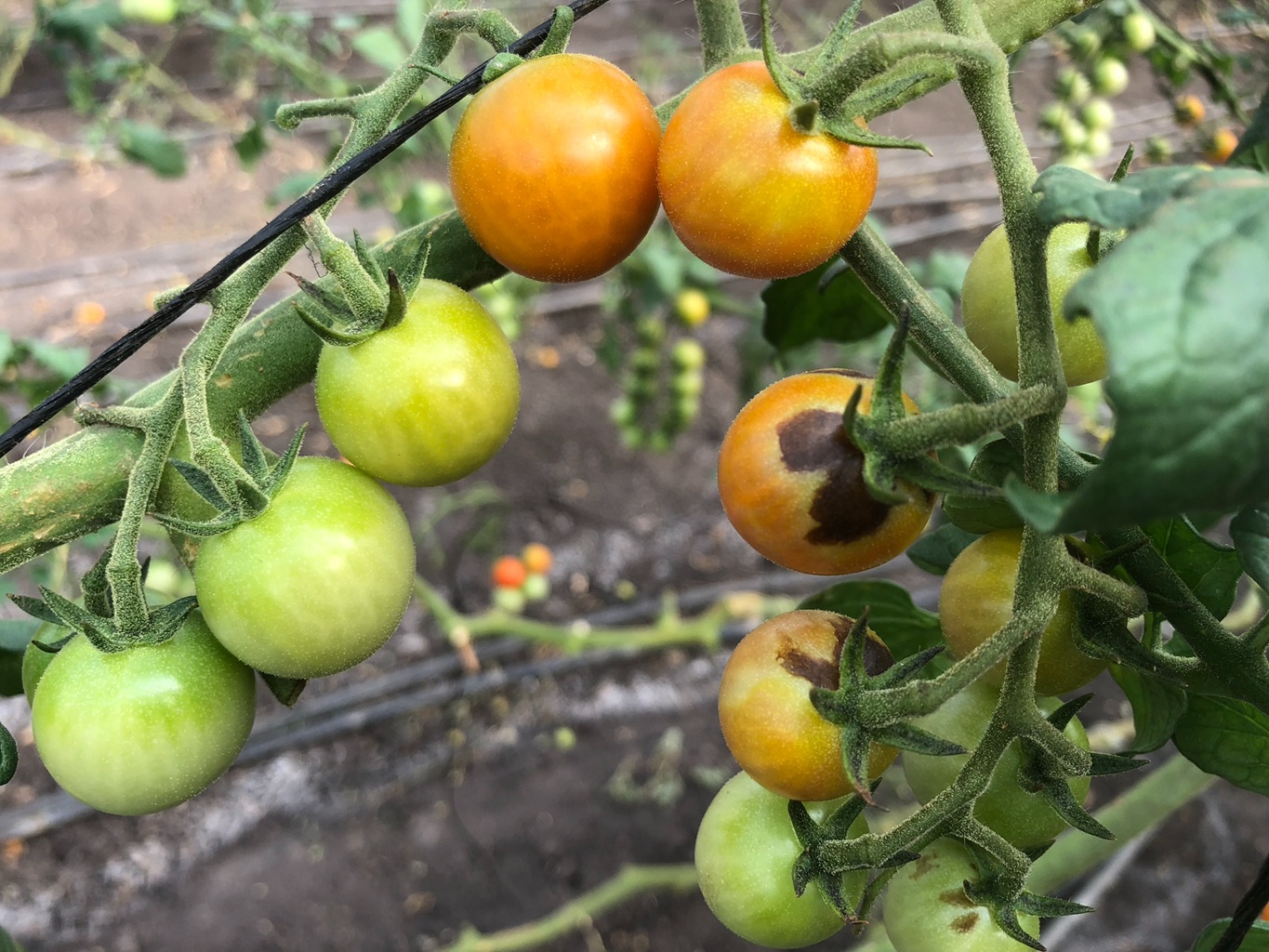
The Calcium Myth Behind Blossom End Rot
If adding calcium fixed blossom end rot, growers would have solved it decades ago.
Blossom end rot (BER) is one of the most frequently discussed physiological disorders in horticulture, and yet it remains one of the most persistent. The standard explanation – calcium deficiency – is technically correct, but operationally misleading.
Most blossom end rot is not caused by a lack of calcium in the soil or fertilizer program. It is caused by a failure to deliver calcium to the fruit at the moment it is structurally required. Treating it as a simple deficiency leads to corrective actions that are logical on paper and ineffective in the field.
Calcium is involved. But calcium alone is rarely the limiting factor growers think it is.
Why Does Blossom End Rot Keep Coming Back Even When Calcium Is Applied?
Blossom end rot is well documented. The physiology is not debated. The crops most affected – tomato, pepper, eggplant, melon – have been studied extensively.
Yet BER continues to surprise growers season after season.
The real cost of blossom end rot is not only lost fruit. It is weeks spent reacting to the wrong problem, repeated calcium applications applied after the damage is already irreversible, and management changes that come too late to matter.
In practice, BER is often diagnosed correctly and managed incorrectly. Calcium is blamed, calcium is applied, and the disorder persists.
Is Blossom End Rot Really Caused by Low Calcium?
Calcium behaves fundamentally differently from mobile nutrients such as nitrogen or potassium.
-
Its transport depends on continuous transpiration-driven water flow
-
Once deposited in tissue, calcium does not redistribute
-
Fruits transpire very little compared to leaves
This creates an inherent limitation. During periods of strong vegetative growth, leaves dominate calcium uptake because they transpire more. Developing fruits, despite having high structural demand for calcium, receive less.
This is why blossom end rot often appears after a strong vegetative start, not during obvious stress. Fields that look uniform, vigorous, and well managed early on are often the ones where BER appears later.
In other words, blossom end rot is frequently triggered by successful early management that was not adjusted as fruit demand increased.
Calcium is not missing. It is being outcompeted.
When Does Blossom End Rot Actually Start?
Blossom end rot does not occur randomly. It requires three conditions to align:
1. High structural demand
Rapid fruit expansion creates high calcium demand during early development.
2. Limited calcium delivery
Low fruit transpiration restricts calcium movement into the fruit.
3. Competition or disruption
Strong vegetative growth, irregular irrigation, or nutrient imbalances divert calcium away from fruit tissue.
Remove any one of these, and BER risk drops sharply. Most calcium programs fail because they focus only on supply, while the problem sits in delivery and timing.
Why Adding More Calcium Often Doesn’t Fix Blossom End Rot
In most production systems, soil calcium levels are already sufficient. Root uptake is rarely the limiting step.
The bottleneck is internal allocation.
Foliar calcium applications illustrate this clearly. Calcium applied to leaves does not move to fruit. It protects only the treated tissue and only if applied before deficiency develops. Once calcium deficiency occurs inside the fruit, the damage cannot be reversed.
This explains a pattern seen repeatedly in the field:
-
Calcium is applied when first symptoms appear
-
Symptoms continue to develop
-
Application rates are increased
-
Confidence in the program declines
The intervention is not wrong. It is simply late.
Why Blossom End Rot Cannot Be “Fixed” Once You See It
Calcium plays a structural role in plants, particularly in stabilizing cell walls during early cell division and expansion.
If calcium delivery to the fruit is insufficient during this early phase, tissue integrity is compromised. Once this window passes, the structure cannot be rebuilt.
A useful analogy is construction.
Steel reinforcement must be placed before concrete is poured. If the steel is missing at that stage, the problem cannot be fixed later by trying to insert it once the concrete has hardened.
Blossom end rot follows the same logic. When calcium does not reach the fruit during early development, later calcium applications cannot repair the structural weakness, even if calcium levels in the soil or plant are high.
Why Irrigation Uniformity Often Matters More Than Fertilizer Choice
Calcium transport depends entirely on water movement through the plant.
Even short interruptions in soil moisture can reduce calcium flow to developing fruit. Mild stress followed by rewatering, uneven wetting patterns, or fluctuating drip performance are all common triggers.
In many production systems, irrigation rhythm explains BER risk better than calcium formulation.
This is especially true in:
-
Drip-irrigated systems
-
Protected cultivation
-
High EC or saline environments
Stabilizing water flow often reduces BER more reliably than changing calcium products.
Nutrient Interactions That Increase Risk
Blossom end rot is often induced indirectly.
High ammonium nutrition promotes rapid vegetative growth and competes with calcium uptake. Excess potassium and magnesium further reduce calcium availability at the root level. High EC reduces water uptake and weakens calcium transport even when calcium concentration is adequate.
This is why BER frequently appears in systems that look balanced on paper. The imbalance is physiological, not analytical.
Why Tomato and Pepper Expose the Problem So Clearly
Tomato and pepper combine several risk factors:
-
Large, fast-growing fruits
-
Low fruit transpiration
-
Strong sink competition
-
High nitrogen regimes
-
Frequent use of protected cultivation
Blossom end rot in these crops is not an exception. It is a predictable outcome when growth, water, and nutrition are not coordinated.
That is why they are ideal reference crops for understanding calcium-related disorders across many species.
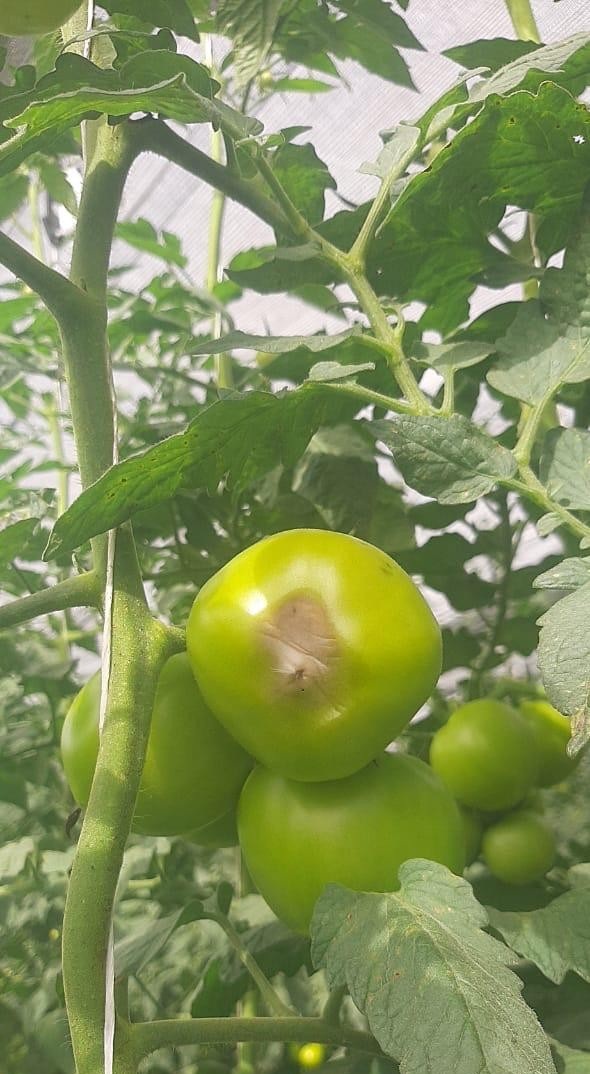
If Calcium Is There, Why BER?
Blossom end rot is not mysterious, and it is not a failure of fertilizer programs.
It shows that:
-
Nutrient presence does not guarantee nutrient delivery
-
Early vigor can create later vulnerability
-
Corrective actions are often taken after the critical window
-
Structural nutrients must arrive on time
Nutrition, irrigation, and growth rate cannot be managed independently when calcium is involved.
Blossom end rot is best understood as a coordination failure. Calcium is involved, but calcium alone cannot solve it.
By the time BER is visible, management decisions are already weeks late.
How To Recognize BER Risk Before Symptoms Appear
Blossom end rot can be anticipated long before any visual damage appears, but only if risk is evaluated by growth stage and process, not by symptoms.
The highest-risk window occurs during early fruit set and initial fruit expansion, when cell division and cell wall formation are most active. At this stage, any disruption in calcium delivery becomes structurally irreversible, even though the fruit still looks healthy.
In practice, BER risk is elevated when several of the following occur at the same time:
-
Rapid vegetative growth driven by high nitrogen availability
-
Strong leaf expansion that increases competition for calcium
-
Fluctuating soil moisture or inconsistent irrigation timing
-
Rising EC or salinity that limits water uptake
-
High potassium or ammonium levels relative to calcium
What makes this phase particularly misleading is that the crop often looks excellent. Vigor is high, canopy development is uniform, and fruit set appears successful. This is precisely when management adjustments matter most.
By the time the first darkened tissue appears at the blossom end, the triggering conditions are already in the past. Effective prevention therefore depends on recognizing risk patterns, instead of reacting to visible symptoms.








About Post Author
